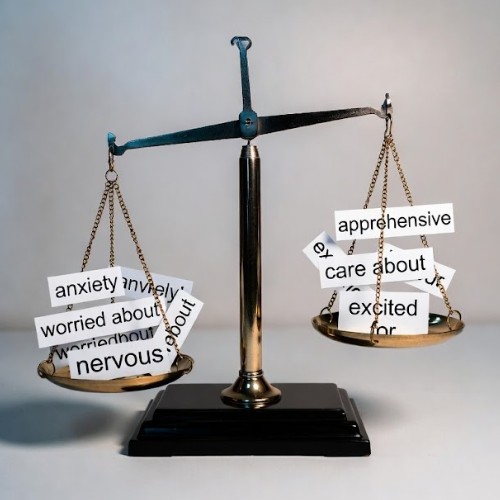
The Weight of Words: How the Language You Use Shapes Anxiety and Habits

The Weight of Words: How the Language You Use Shapes Anxiety and Habits
Author: Nigel Edwards
The words we use to describe anxiety and habits like smoking or vaping can intensify or soften our experience. Learn how changing language can reduce emotional weight and support real change.
Words are powerful.
Not just in how we speak to others — but in how we speak to ourselves.
In my work with clients experiencing anxiety, stress, and habits such as smoking or vaping, I often notice something subtle but important:
the language people use can quietly increase the emotional weight they’re carrying.
One word in particular comes up again and again.
Anxiety.
The Hidden Weight of the Word “Anxiety”
For many people, simply saying “I’ve got anxiety” triggers an immediate physical response.
Shoulders tense.
Breathing tightens.
The mind starts scanning for danger or problems.
That’s because the word “anxiety” has become loaded.
It often implies something permanent, overwhelming, or wrong.
But very often, what someone is experiencing isn’t anxiety in the way they imagine it.
It may actually be:
A nervous system that’s temporarily overloaded
A part of them feeling uncertain or overstretched
A learned protective response from earlier life
A moment of internal pressure or anticipation
When all of these experiences are labelled as anxiety, the mind treats them as something bigger and more threatening than they need to be.
And that, in itself, can intensify the feeling.
How Language Shapes Experience
The brain responds to meaning.
When we use heavy or absolute language, the emotional system reacts accordingly.
When we soften the language, the nervous system often follows.
For example:
Instead of saying:
“I have anxiety”
Try experimenting with:
“A part of me feels unsettled right now”
“My system is a bit overloaded”
“Something inside is asking for reassurance”
These alternatives don’t deny the experience.
They simply reduce the emotional charge attached to it.
And when the charge reduces, choice returns.
Why This Matters for Habits Like Smoking and Vaping
This principle doesn’t just apply to anxiety — it’s central to habits as well.
When someone says:
“I need a cigarette.”
The word need creates urgency and power.
But when it becomes:
“A familiar pattern has switched on.”
The experience changes.
It becomes something observable — not something that controls you.
This shift in language helps create distance between you and the habit.
And that distance is where real change begins.
Changing Words Isn’t Cosmetic — It’s Foundational
This isn’t about positive thinking or pretending everything is fine.
It’s about recognising that:
Language shapes perception
Perception shapes emotion
Emotion shapes behaviour
When the words change, the experience often follows.
In therapy, this is one of the first steps in helping people feel calmer, more in control, and less at war with their own minds.
A Gentle Way Forward
If you’re struggling with anxiety, stress, smoking, or vaping, it doesn’t mean there’s something wrong with you.
It often means your mind learned a pattern that once helped — but no longer serves you.
When that pattern is understood and updated, change can happen naturally and calmly — sometimes far more quickly than people expect.
How To Take Action Now
If you’d like support in understanding what’s really driving anxiety or habits like smoking or vaping — and want help changing them without force or willpower — you can book a session here:


